Finally, we come to the training in natural presence… Many people approach this naively, feeling that a drastic simplification of their life will be sufficient (adoption of a monastic life, living simply in nature, stepping off the fast track, etc.), but we usually bring our baggage with us when we make these moves. The first effort here is to rid ourselves of accumulations from the past… The second effort is to let go of the future. …
The final challenge of habituated patterns is to question direct experience. How do we know? How can we trust this knowing, which is totally beyond the ordinary conditioned experience of life? Like Buddha Shakyamuni, we turn to no external reference and live in the knowing. We rest in presence, in the very mystery of being itself.
Lineage is not the passing on of “The Truth” from one generation to another. It is the passing on of the methods, the tools, with which you uncover and live this natural knowing.
Imbalance in a relationship, whatever the basis of the relationship, inevitably leads to lack of respect on one side and resentment on the other. Relationships can and do endure periods of imbalance. Sooner or later, however, the imbalance must be addressed if the relationship is to continue.
Increasingly, money has become the only medium for exchange between people in our culture. The human part of us resists this as we feel that there is more than simply financial value in our interactions. But money is now used to determine the value of time, the value of any material article, the value of culture, the value of social programs, etc. It is this seeming willingness to measure every aspect of life in money that indicates the true extent to which we have engaged this collective thought.
In these notes I want to point out the relationship between the three marks of existence (the pointers), the three doors to freedom, and the three aspects of meditative experience (the openings). The three marks (change, suffering, and non-self) can be viewed as pointers, aspects of our experience that point to three doors of understanding […]
From the Buddhist point of view the mind-body system with which we identify has the seed of attention within it already. We simply provide conditions for sustained active attention to develop. The practice of meditation is the practice of providing those conditions. This is how we cultivate attention, just as we would a plant or tree.
Meditation is not a quick cure-all. We are used to quick fixes: ten ways to better communication, the five magic steps for better relationships, the eight things every manager should know, etc. The trouble is that all of this good advice is useless if we aren’t sufficiently present to implement it. Meditation cultivates just that presence, so we could regard it as a foundational skill.
One of the primary characteristics of learned helplessness is that the person feels passive with respect to the system. The passivity, however, is only half the story… Can learned helplessness be undone? The answer is “Yes.” The cost, however, is high.
The teacher-student relationship is based on a shared aim—your awakening to the mystery of being. It is not based on mutual profit or on emotional connection. The responsibilities of a teacher are three: Everything else is extra and is usually based on the projections of the student, the teacher, or both. If the teacher is […]
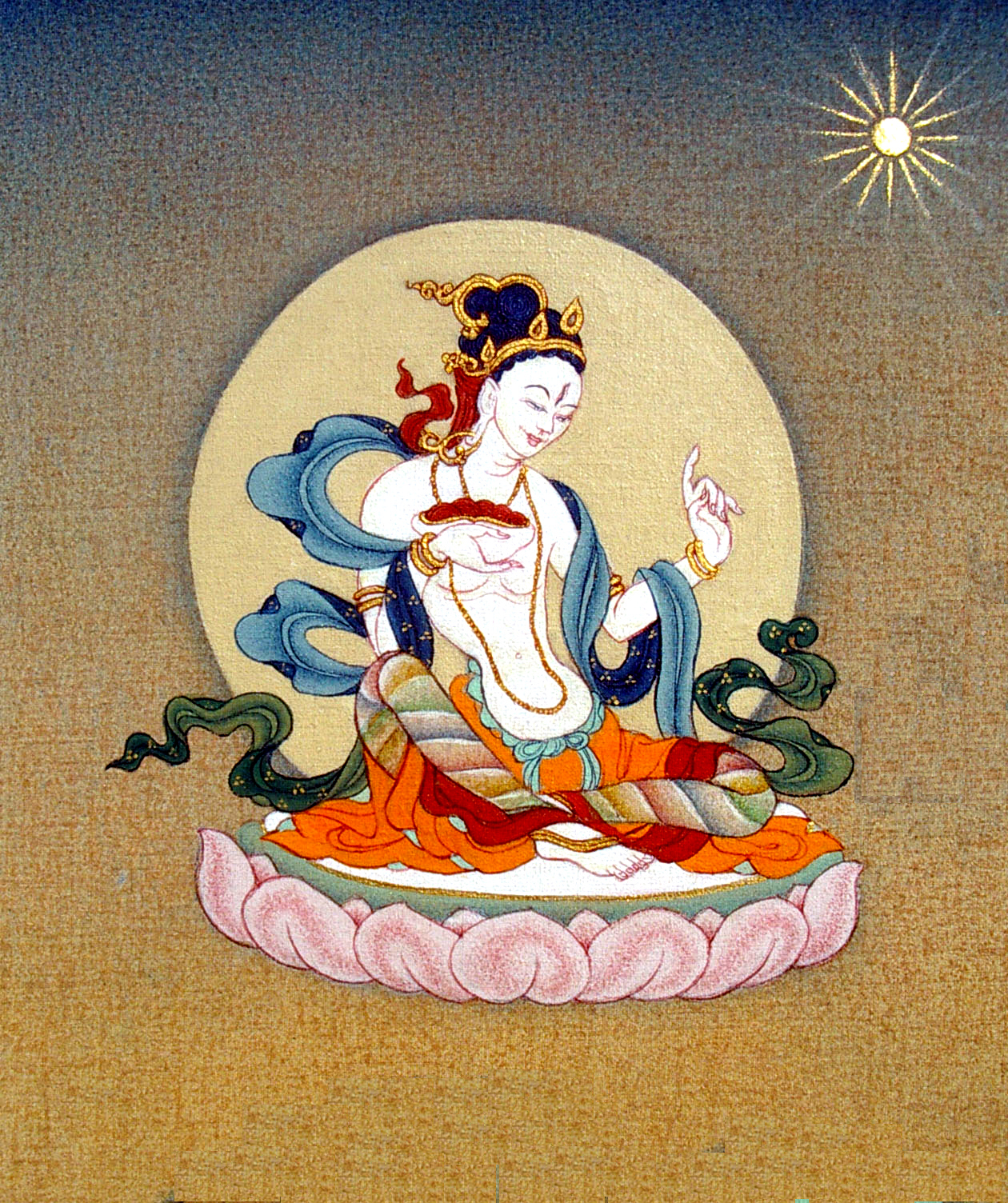
In order to help clarify the nature and purpose of deity practice, I discuss it here in a way that gives one the actual flavor of this practice; that is, the sense of what might actually be happening experientially in deity practice. I also suggest an approach to deity practice that doesn’t depend on one’s ability to visualize vividly. After all, the purpose of this practice is not to generate sparkling imagery but to transform the way we experience the world and ourselves. Finally, for those who take up this practice, I suggest ways you might use the deity to be awake and present in your life.
Everyone knows the old adage “You can’t see the forest for the trees.” In the work environment, the trees are the immediate pressures you feel: demands and directives from above, needs and problems from below. The forest is the bigger picture, the picture beyond the immediate pressures. Most people react to remove pressures as quickly […]
This greed for results, for something dramatic, undermines our practice completely. The effects of meditation are subtle and take time to mature. When we are constantly looking for some kind of sign or attainment from our practice, we are essentially looking outside ourselves.
Compassion is the difference between a faith that opens you to what life brings and beliefs that force you to close down to protect what you cannot or will not question. Compassion enables you to accept and appreciate the experience of those with whom you have differences. In difficult situations, it leads you to find a way that meets the vital interests of all concerned when possible and to minimize the pain when that is not possible. Compassion puts you directly in touch with the human condition. It cuts through beliefs. It goes straight to the heart.
When I look back on my first years of Buddhist practice, let’s say the first ten to twelve years, my practice was essentially a reaction to suffering. Most of the time I didn’t know what I was reacting to. I put a great deal of effort into practice, into study, into serving my teacher. I learned a great deal. But it didn’t ease anything inside me. It wasn’t until much later that I began to appreciate in a very different way what Kalu Rinpoche had attempted to teach me, what Buddha originally taught, and what practice might mean.